
Why Your Credit Score Shapes Your Financial Life
The beginner’s guide credit builder you’ve been looking for starts with one simple truth: your credit score controls more of your life than most people realize.
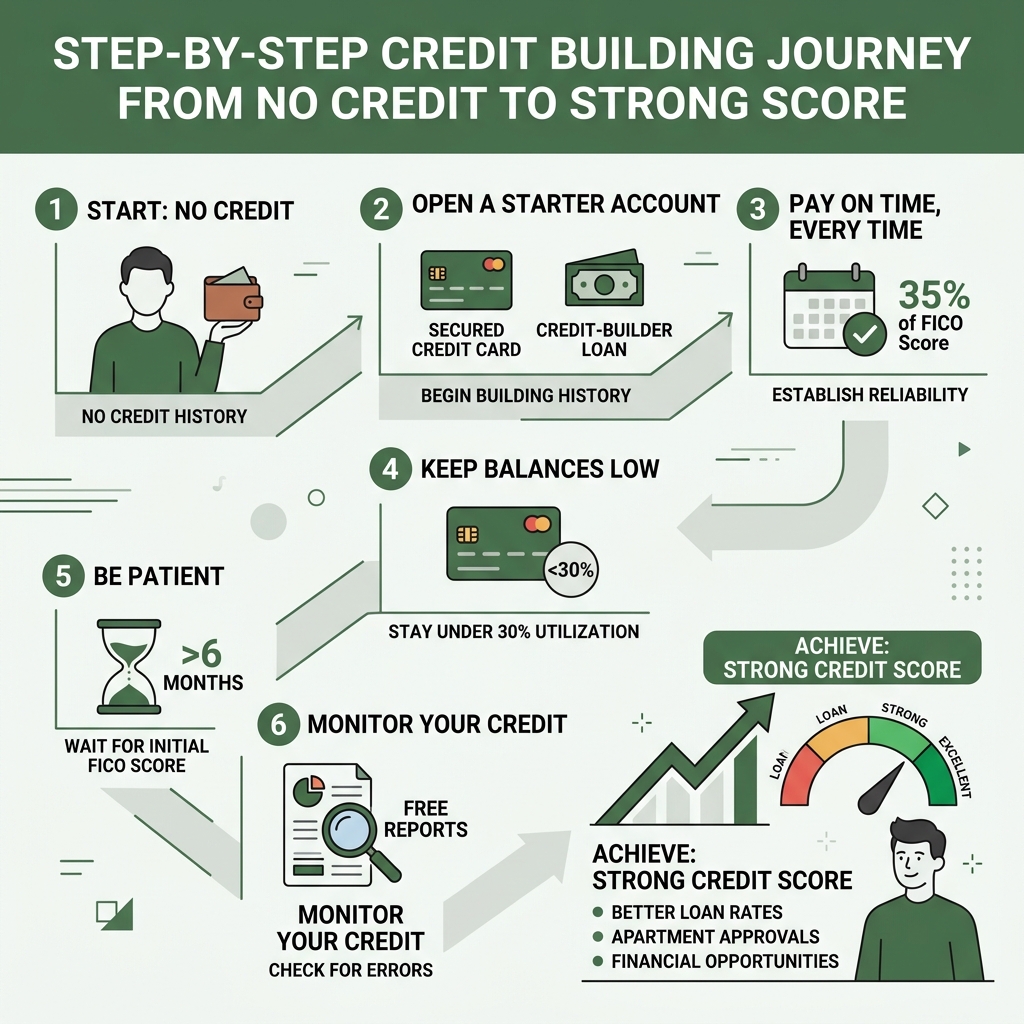
Here’s a quick snapshot of how to start building credit from scratch:
- Open a starter account – a secured credit card or credit-builder loan
- Pay on time, every time – payment history is 35% of your score
- Keep balances low – stay under 30% of your credit limit
- Be patient – it takes at least 6 months to generate a FICO score
- Monitor your credit – check your free reports at AnnualCreditReport.com
Right now, roughly 26 million Americans are “credit invisible” – meaning they have no credit file at all. No score. No history. That invisibility is expensive. It means loan denials, sky-high interest rates, rejected apartment applications, and utility deposits that others don’t have to pay.
The frustrating part? You need credit to get credit. It feels like a trap.
But it isn’t one – if you know where to start.
Building credit doesn’t require a lot of money or complicated tricks. It requires a simple plan and consistent follow-through. This guide walks you through everything: what credit actually is, how to build it from zero, what damages it, and how to protect what you build.
Understanding the Basics: A Beginner’s Guide Credit Builder
At United Credit Experts, we believe that understanding the ABCs of Credit is the first step toward financial freedom. To put it simply, credit is your reputation as a borrower. It is the ability to borrow money or access goods or services with the understanding that you’ll pay for them later, usually with interest or fees attached.
Think of your credit history as a “financial biography.” It’s a record of how you’ve handled borrowed money in the past. When you apply for a loan or a credit card, lenders look at this biography to decide if you’re a “character” they want to do business with. If you have no history, you are “credit invisible.” As we mentioned, over 26 million U.S. adults fall into this category, often because their regular payments—like rent and utilities—aren’t traditionally reported to the major bureaus.
A Beginner’s Guide Credit Builder: Why History Matters
Why should you care about this three-digit number? Because in the U.S., and specifically for our neighbors in Northwest Indiana and Crown Point, your credit score is the key to your economic mobility.
Establishing a solid history provides:
- Borrowing Power: High scores mean you can qualify for larger loans, like a mortgage for a home in Crown Point or a loan for a new car.
- Lower Interest Rates: A good score can save you tens of thousands of dollars over your lifetime by securing lower interest rates.
- Housing Access: Most landlords run a credit check. A thin file could mean a rejected application or a much higher security deposit.
- Employment Opportunities: Some employers, especially in the financial or government sectors, review credit reports as part of a background check to assess responsibility.
- Utility Savings: With good credit, you can often skip the “new customer” deposits for electricity, water, and cell phone plans.
Different Types of Credit Accounts
Not all credit is created equal. To build a balanced profile, it helps to understand What Affects a Credit Score by looking at the different types of accounts:
- Revolving Credit: This is the most common type for beginners. You are given a credit limit (like on a credit card) and can borrow against it repeatedly as long as you pay back at least the minimum each month.
- Installment Loans: These are loans for a fixed amount that you pay back in set monthly installments over a specific period. Examples include auto loans, student loans, and mortgages.
- Service Credit: These are your monthly agreements with utility companies, cell phone providers, and gym memberships. While these don’t always help your score, they can definitely hurt it if they go to collections.
- Retail Cards: Store-specific credit cards are often easier to get for beginners, though they usually come with lower limits and higher interest rates.
Top Strategies to Establish Credit with No History
If you’re starting from zero, the “chicken and egg” problem is real. You need credit to get it, but how do you get that first “yes”?

One of the most effective tools we recommend is the secured credit card. Unlike a traditional card, a secured card requires a cash deposit that serves as collateral. If you deposit $300, your credit limit is usually $300. This minimizes the risk for the lender, making them much more likely to approve you. After 6 to 12 months of on-time payments, many lenders will “graduate” you to an unsecured card and return your deposit.
Another fantastic option is a credit-builder loan. These are specifically designed for people with limited credit history. Instead of giving you the money upfront, the lender puts the loan amount (usually $300 to $1,000) into a locked savings account. You make monthly payments over 6 to 24 months, and once the loan is paid off, the money is released to you. It’s essentially a forced savings plan that builds your credit history simultaneously!
Low-Cost Entry Points for Beginners
You don’t always have to go it alone. If you’re ready to Get Started, consider these entry points:
- Authorized User Status: Also known as “piggybacking,” this involves a trusted family member adding you to their established credit card account. You don’t even have to use the card; their long, positive history begins to reflect on your report. Just ensure the primary user has excellent habits, as their mistakes could also impact you.
- Student Credit Cards: If you are currently enrolled in college, many banks offer student-specific cards with lower barriers to entry.
- Co-signers: A co-signer with good credit can help you qualify for a loan you couldn’t get on your own. However, be careful—if you miss a payment, your co-signer’s credit is damaged too, which can make for a very awkward Thanksgiving dinner.
Alternative Reporting Methods
In 2024 and looking toward 2026, the credit landscape is changing. Lenders are increasingly looking at “alternative data.”
- Rent Reporting: Services like Boom or RentTrack can report your on-time rent payments to the bureaus.
- Utility and Phone Bills: Tools like Experian Boost allow you to link your bank account to identify utility and streaming service payments, potentially giving your score an instant lift.
- Credit Bureau Programs: Programs like Experian Go are designed specifically for the “credit invisible” to help them create a profile from scratch using these alternative methods.
Mastering the Five Factors of Your Credit Score
Understanding how your score is calculated is like having the answers to a test. FICO scores, which are used by 90% of top lenders, are weighted based on five specific factors.
| Factor | Weight | Why It Matters |
|---|---|---|
| Payment History | 35% | The single most important factor. Even one 30-day late payment can drop your score significantly. |
| Amounts Owed | 30% | Also known as “credit utilization.” It’s the percentage of your available credit that you’re actually using. |
| Length of History | 15% | How long your accounts have been open. This is why you should never close your first credit card! |
| Credit Mix | 10% | Lenders like to see that you can handle both revolving credit (cards) and installment loans. |
| New Credit | 10% | Frequent applications in a short time suggest financial distress and can lower your score. |
Maintaining Your Score with a Beginner’s Guide Credit Builder Routine
Building the score is only half the battle; maintaining it requires a routine. We suggest following these simple rules:
- The 30% Rule: Never use more than 30% of your credit limit. If your limit is $1,000, keep your balance under $300. For the best results, aim for under 10%.
- Set Up Autopay: Set your accounts to automatically pay at least the minimum amount. This is your insurance policy against a forgotten due date.
- Calendar Reminders: Set a reminder five days before your due date to check your accounts and ensure the autopay is ready to go.
- Watch the Statement Date: Your “statement closing date” is when the bank reports your balance to the bureaus. Paying your bill before this date can ensure a low balance is reported, even if you use the card heavily during the month.
- Address Collections Immediately: If you do fall behind, understand how Collections and Credit Scores interact. Unpaid collections can haunt your report for seven years.
Defining a Good Credit Score
Credit scores range from 300 to 850. Here is how the industry generally views those numbers:
- 800 – 850 (Exceptional): You’ll get the lowest interest rates and best perks.
- 740 – 799 (Very Good): You are well above the average and will likely be approved for almost any loan.
- 670 – 739 (Good): This is the “sweet spot” for most lenders. It shows you are a responsible borrower.
- 580 – 669 (Fair): You may face higher interest rates or be required to provide a deposit.
- 300 – 579 (Poor): You will likely need to use secured products or credit-repair strategies to move upward.
Long-Term Maintenance and Fraud Protection
Once you’ve built a score you’re proud of, you need to protect it. Under the Know Your Rights FCRA (Fair Credit Reporting Act), you have the right to an accurate credit report.
Since September 2023, the three major bureaus (Equifax, Experian, and TransUnion) have agreed to offer free credit reports weekly via AnnualCreditReport.com. We recommend checking these at least once a month. If you find an error, the law requires the credit bureau to investigate and respond within 30 days.
Avoiding Common Credit Pitfalls
Even with the best intentions, beginners often fall into these traps:
- Maxing Out Cards: Even if you pay it off in full every month, a maxed-out card on your statement date will tank your score temporarily.
- Applying Frequently: Every time you apply for credit, a “hard inquiry” is placed on your report, which can stay there for two years and lower your score for one.
- Closing Old Accounts: The age of your oldest account is a major factor. Keep that first card open, even if you only use it for a small $10 subscription once a month.
- Paying Only the Minimum: While this keeps your payment history positive, the interest will grow, making it harder to keep your utilization low.
Protecting Against Identity Theft
Identity theft can undo years of hard work in a single weekend. To stay safe:
- Fraud Alerts: You can place a free fraud alert on your credit file, which tells lenders to take extra steps to verify your identity before issuing credit.
- Credit Freezes: This is the “nuclear option.” It prevents anyone (including you) from opening new accounts until you “thaw” the freeze.
- Shred Everything: Any document with your name and financial info should be shredded before it hits the trash.
- Monitor for Unrecognized Accounts: If you see an account you didn’t open, act immediately. This is the most common sign of fraud.
Frequently Asked Questions about Credit Building
How long does it typically take to build a good credit history?
It takes a minimum of six months of account activity to generate a FICO score. However, building a “strong” score (700+) usually takes 12 to 24 months of consistent, on-time behavior. This is known as the “seasoning period,” where lenders wait to see if your good habits are a fluke or a lifestyle.
What common credit mistakes should I avoid as a beginner?
The biggest mistake is a late payment. A single 30-day delinquency can stay on your report for seven years. Also, avoid the temptation to co-sign for friends or family members unless you are prepared to pay the debt yourself. Finally, be wary of predatory lenders who offer “easy” credit with astronomical fees that exceed 25% of the credit limit.
How can I monitor my credit report for accuracy?
Use the official site, AnnualCreditReport.com, to pull reports from the three major bureaus: Equifax, Experian, and TransUnion. Look for incorrect addresses, misspelled names, or accounts that don’t belong to you. Identifying these errors early can save you a massive headache when it’s time to apply for a mortgage or a car loan.
Conclusion
Building credit is a marathon, not a sprint. It’s about demonstrating to the world—and to lenders here in Indiana and beyond—that you are reliable and consistent. By using the tools in this beginner’s guide credit builder, you are taking control of your financial biography.
At United Credit Experts, we are dedicated to providing the financial literacy you need to navigate this journey. Whether you are starting from scratch or looking to improve a fair score, our Process is designed to simplify the complex and empower you with actionable steps.
Ready to stop being “credit invisible” and start opening doors to your future? Get Started with us today and let’s build something great together.