
Why Your Credit Score Controls Your Financial Future
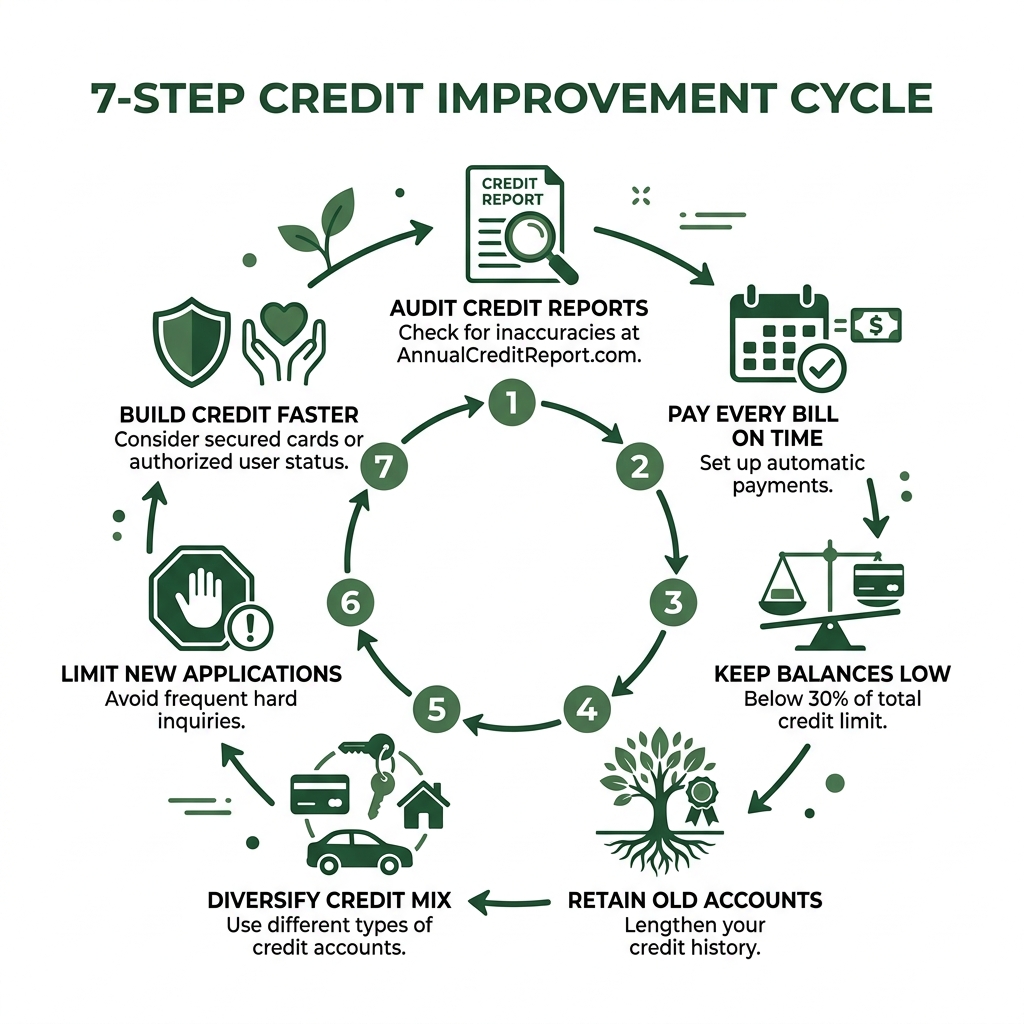
Want to improve credit score fast? Here are the 7 key steps:
- Audit your credit reports for errors at AnnualCreditReport.com
- Pay every bill on time — set up autopay so you never miss a due date
- Keep credit card balances below 30% of your total credit limit
- Don’t close old accounts — credit age matters
- Diversify your credit mix with different account types over time
- Limit new credit applications to avoid unnecessary hard inquiries
- Use tools like secured cards or authorized user status to build credit faster
Your credit score is a three-digit number — somewhere between 300 and 850 — that tells lenders how reliably you pay back money. The higher it is, the easier it is to borrow money at rates you can actually afford.
A low score can mean loan denials, sky-high interest rates, and even trouble renting an apartment. The average U.S. credit score was 715 in 2024, and roughly 71% of Americans had a score above 670. If you’re not there yet, you’re not alone — and you can get there.
The good news? Credit scores aren’t fixed. They change constantly as new information is added to your credit report. That means every positive step you take starts working for you right away.
There’s no magic hack to fix a score overnight. But with the right habits — done consistently — most people see real improvement within a few months.
Here’s exactly how to do it.
1. Audit Your Credit Reports for Accuracy
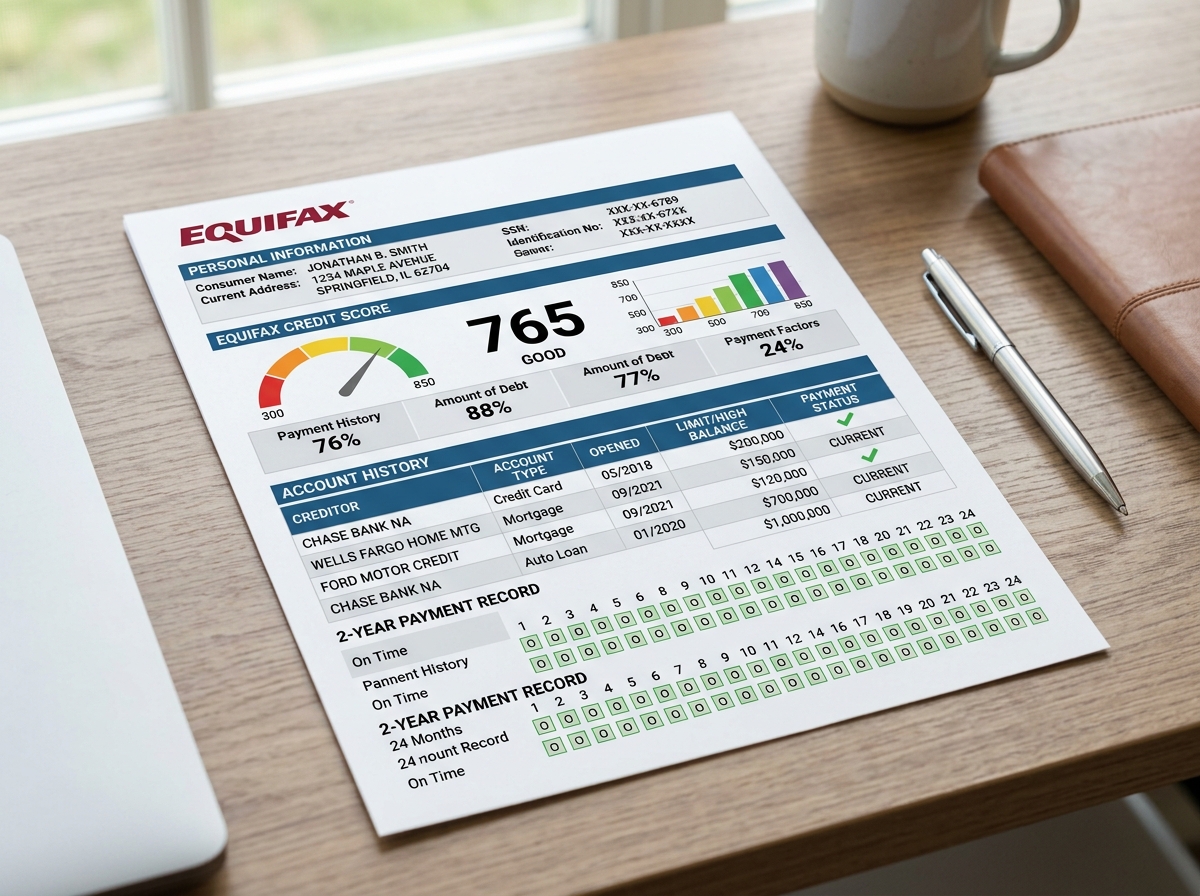
Before you can fix your score, you need to know exactly what’s being reported about you. At United Credit Experts, we like to think of your credit report as a financial “transcript.” If there’s a typo in that transcript, your “grade” (the credit score) will suffer through no fault of your own.
In the United States, and specifically for our neighbors in Northwest Indiana, you have three main credit reports from the big three agencies: Equifax, Experian, and TransUnion.
Get Your Free Reports
You don’t have to pay to see your own data. Everyone is entitled to receive a free copy of their credit report from each of the three agencies weekly. The official place to get these is AnnualCreditReport.com.
Once you have them, look for:
- Accounts you don’t recognize.
- Late payments that you actually paid on time.
- Debts that should have “aged off” (most negative items stay for seven years).
- Incorrect balances or credit limits.
Disputing Errors
If you find a mistake, you have the right to fix it. This isn’t just a suggestion; it’s a legal protection under the Fair Credit Reporting Act. You can Know Your Rights FCRA to ensure these agencies treat you fairly. When you dispute an error, the agency typically has 30 days to investigate. If they can’t prove the information is accurate, they must remove it. Removing a single incorrect late payment can sometimes provide a significant boost to your efforts to improve credit score results.
2. Master Payment Habits to Improve Credit Score
If credit is a game, payment history is the MVP. It is the single most important factor in calculating your score.
Why Timing is Everything
Whether you use the FICO model or the VantageScore model, your track record of paying on time is paramount. Payment history makes up roughly 35% of a FICO Score and 40% of a VantageScore 3.0.
| Scoring Factor | FICO Weight | VantageScore 3.0 Weight |
|---|---|---|
| Payment History | 35% | 40% |
| Amounts Owed (Utilization) | 30% | 20% |
| Length of Credit History | 15% | 21% |
| Credit Mix | 10% | 11% |
| New Credit | 10% | 5% |
Set Up Autopay
Life in Crown Point, IN can get busy. Between work, family, and community events, it’s easy to let a due date slip. Setting up automatic bill payments is a “set it and forget it” way to ensure you never miss a deadline. Even paying just the minimum on time is better for your score than paying the full balance a month late.
Get Credit for Rent and Utilities
Historically, your monthly rent and utility bills didn’t help your credit. That has changed. Services like Experian Boost allow you to add on-time utility, phone, and even streaming service payments to your Experian credit report.
Additionally, many landlords now use rent-reporting services. Since VantageScore now weighs rent and utility records, this can help nearly 35 million people who were previously “unscorable” build a history from scratch. To learn more about how these basics work, check out the ABCs of Credit.
3. Optimize Your Credit Utilization Ratio
The second biggest piece of the puzzle is “amounts owed,” better known as your credit utilization ratio. This is a fancy way of saying: “How much of your available credit are you actually using?”
The 30% Rule
If you have a credit card with a $10,000 limit and you have a balance of $3,000, your utilization is 30%. While many experts suggest staying under 30%, those with the highest scores often keep their utilization in the single digits.
High utilization signals to lenders that you might be overextended. If you want to improve credit score numbers quickly, paying down revolving debt is often the fastest way to see a jump. Unlike payment history, which takes years to build, utilization has “no memory.” As soon as your credit card company reports a lower balance to the bureaus, your score can update.
Strategies to Lower Utilization
- The Debt Snowball: Pay off your smallest balances first to gain momentum.
- The Debt Avalanche: Focus on the accounts with the highest interest rates first to save money.
- Request a Limit Increase: If your income has gone up, ask your bank for a higher limit. As long as you don’t spend more, your utilization ratio will drop.
- Pay Twice a Month: Make a payment two weeks before your due date and another on the due date. This keeps the balance that actually gets reported to the bureaus lower.
Be careful with accounts that have gone to collections. These can stay on your report for seven years, even if paid. Understanding Collections and Credit Scores is vital here. You are protected by the Fair Debt Collection Practices Act (FDCPA) when dealing with debt collectors.
4. Protect Your Credit Age and Diversify Your Mix
How long have you been using credit? For lenders, time equals trust. Length of credit history accounts for 15% of your FICO Score.
Don’t Close Old Accounts
It’s a common mistake: you pay off a credit card you’ve had for ten years and decide to close the account to celebrate. Don’t do it! Closing an old account shortens your average credit age and reduces your total available credit, which can cause your score to drop. Unless the card has a high annual fee, it’s usually better to leave it open and use it for a small purchase once or twice a year to keep it active.
Diversify Your Credit Mix
Lenders like to see that you can handle different types of debt. This is called your “credit mix” and makes up 10% of your score. There are two main types:
- Revolving Credit: Credit cards and lines of credit.
- Installment Loans: Mortgages, auto loans, and student loans.
If you only have credit cards, adding a small installment loan (like a credit-builder loan) might help. However, you shouldn’t take out a loan just to build credit if you have to pay high interest. To understand more about what goes into these calculations, read about What Affects a Credit Score.
5. Use Strategic Building Methods for Faster Results
If you are starting from scratch or rebuilding after a financial setback like bankruptcy, standard credit cards might be out of reach. In Northwest Indiana, we see many hardworking people who just need a foot in the door.
Become an Authorized User to Improve Credit Score
This is often called “piggybacking.” If a family member has a credit card with a long history of on-time payments and a low balance, they can add you as an authorized user. You don’t even need to use the card; their positive history will show up on your credit report. This is a great way for parents to help their children in Crown Point, IN start their financial lives on the right foot.
Use Secured Cards to Improve Credit Score from Scratch
A secured credit card requires a cash deposit—usually around $200—which serves as your credit limit. Because the bank has your deposit, they are much more willing to give you a card even if you have poor credit. Use it for small purchases, pay it off in full every month, and within 6 to 12 months, you might qualify to “graduate” to a standard, unsecured card. For more on these types of strategies, you can check the Latest guidance from the Federal Trade Commission.
6. Limit Hard Inquiries and New Applications
Every time you apply for credit, the lender does a “hard pull” or hard inquiry on your report. This usually knocks about five points off your score and stays on your report for two years.
Hard Pulls vs. Soft Pulls
- Hard Pull: Happens when you apply for a loan or credit card.
- Soft Pull: Happens when you check your own score or when a lender checks your credit for a “pre-approved” offer. Soft pulls do not hurt your score.
The Rate Shopping Window
If you are looking for a mortgage or an auto loan in Indiana, the credit scoring models understand that you want to find the best rate. As long as you do all your “shopping” within a 14-45 day window, all those inquiries will usually be treated as a single hard pull. This allows you to compare offers without tanking your score.
Be wary of opening too many accounts too quickly. New credit makes up 10% of your score, and a sudden burst of applications can make you look desperate for cash to a lender. For a humorous but informative look at how these reports are managed, we recommend watching Credit Reports with John Oliver.
Frequently Asked Questions about Credit Scores
How long does it take to see a higher score?
Improving a credit score is a marathon, not a sprint. While you might see small changes in 3 to 6 months, significant rebuilding after a major event like a foreclosure or bankruptcy can take years. The key is consistency. Every on-time payment is a brick in the foundation of your financial future.
What is the difference between FICO and VantageScore?
FICO is the “old school” model used by about 90% of top lenders, especially for mortgages. VantageScore was created by the three credit bureaus to compete with FICO. They weigh things slightly differently—for example, VantageScore might give more weight to the last 24 months of activity. Most people find that their scores are relatively similar across both models, but they will rarely be identical.
Should I pay off collections to help my score?
This is a tricky one. In older FICO models, paying off a collection doesn’t necessarily remove the negative impact—it just changes the status to “paid collection.” However, newer models (like FICO 9 and VantageScore 3.0/4.0) ignore collection accounts that have a zero balance.
Sometimes, you can negotiate a “pay-for-delete,” where the collector agrees to remove the item from your report entirely if you pay the debt. Always get such agreements in writing! To understand debt collection better, check out Collection Companies with John Oliver.
Conclusion
At United Credit Experts, we believe that financial empowerment starts with education. Credit doesn’t have to be a mystery. At its core, credit is simply lent money that you promise to pay back later. By mastering your repayment habits and keeping your balances low, you take control of your financial story.
Whether you are in Crown Point, IN or anywhere in the Northwest Indiana region, the steps to improve credit score results remain the same: audit your reports, pay on time, and be patient. You’ve worked hard for your money; now it’s time to make your credit work hard for you.
Ready to take the next step? Start your credit improvement journey with us today and let’s build a stronger financial future together.