
Why the Credit Freeze vs Alert Debate Matters More Than Ever
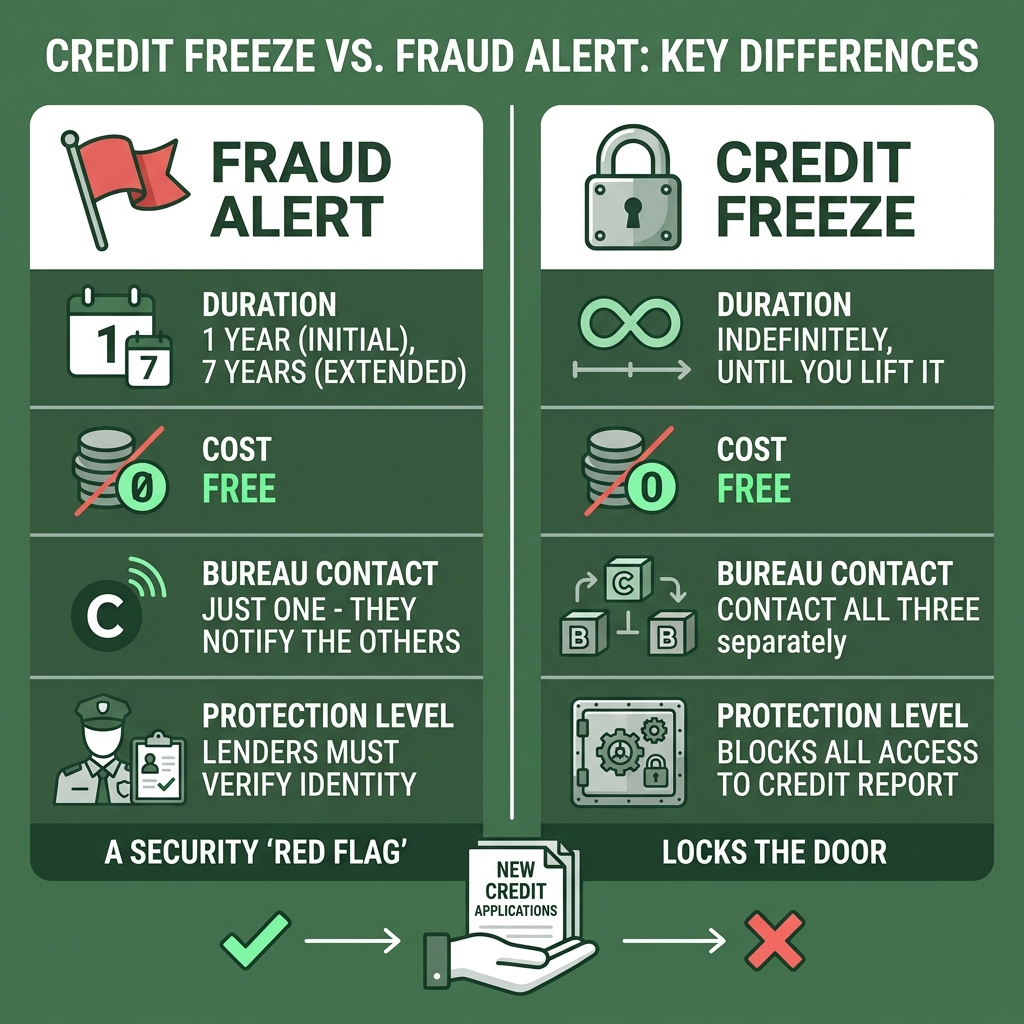
Credit freeze vs alert — here’s the quick difference you need to know:
| Feature | Fraud Alert | Credit Freeze |
|---|---|---|
| What it does | Asks lenders to verify your identity before approving new credit | Blocks lenders from accessing your credit report entirely |
| How long it lasts | 1 year (initial), 7 years (extended) | Indefinitely, until you lift it |
| Which bureaus to contact | Just one — they notify the others | All three, separately |
| Cost | Free | Free |
| Affects credit score? | No | No |
| Best for | People who still need access to new credit | People who want the strongest protection |
Data breaches are no longer rare events. In 2017, the Equifax breach exposed the personal data of 147 million Americans. In 2018, Marriott International reported that 500 million hotel guests had their data stolen. By 2021, 700 million LinkedIn users found their information circulating on the dark web.
The uncomfortable truth? Your personal data may already be out there.
If you’re worried about identity thieves opening fraudulent accounts in your name — especially while already dealing with damaged credit — knowing how to lock down your credit file is one of the most important steps you can take. Two free tools can help: a fraud alert and a credit freeze.
This guide breaks down exactly how each one works, when to use them, and how to put them in place today.
Understanding the Fraud Alert: Your First Line of Defense
A fraud alert is like a “red flag” attached to your credit report. When a business sees this flag, the law requires them to take extra steps to verify that the person applying for credit is actually you. Usually, this means the lender will call you at a phone number you provide to confirm the application.
Think of it as a security guard standing at the door of your credit profile. They don’t lock the door, but they do check IDs very carefully before letting anyone in. This is a vital part of your Know Your Rights FCRA protections, ensuring that your data isn’t misused without your knowledge.
Different types of fraud alerts
Not all fraud alerts are the same. Depending on your situation, you might choose one of these three options:
- Initial Fraud Alert: This is the most common type. It lasts for one year and is available to anyone who suspects they might become a victim of identity theft. You don’t need to prove you’ve been a victim; you just need to want that extra layer of verification. It can be renewed every year.
- Extended Fraud Alert: This is specifically for those who have already experienced identity theft. It lasts for seven years. To get this, you must provide a copy of an identity theft report, such as one filed at IdentityTheft.gov. A major perk of the extended alert is that it removes your name from marketing lists for credit and insurance offers for five years.
- Active-Duty Alert: This is designed for our brave men and women in the military. It lasts for one year and helps protect credit while they are deployed. It also removes the person from marketing lists for two years.

How to place a fraud alert
One of the best things about a fraud alert is how easy it is to set up. You only need to contact one of the three major credit bureaus. By law, the bureau you contact must notify the other two.
- Equifax: equifax.com/personal/credit-report-services
- Experian: experian.com/help/
- TransUnion: transunion.com/credit-help
Once the alert is in place, you are entitled to a free credit report from each bureau. Reviewing these is essential to ensure no ghost accounts have already been opened. For a deeper dive into why these reports matter, check out our more info about credit reports section.
The Credit Freeze: Locking Down Your Financial Profile
If a fraud alert is a security guard, a credit freeze (also known as a security freeze) is a massive steel vault door with a heavy-duty padlock. When you freeze your credit, you are essentially telling the credit bureaus: “Do not show my credit report to anyone unless I specifically tell you to.”
Since most lenders won’t open a new account without checking your credit report first, this effectively stops identity thieves in their tracks. They might have your Social Security number, but they can’t get past the vault door. This is the gold standard for data breach protection.
How a credit freeze works
A credit freeze is a “hard block.” It doesn’t just ask for verification; it denies access. Here is what you need to know about the mechanics:
- Duration: Unlike fraud alerts, a credit freeze lasts indefinitely. Once it’s on, it stays on until you decide to “thaw” or lift it.
- Access: You can still access your own report. Furthermore, your existing creditors (like your current mortgage or credit card company) and certain government agencies can still see your report.
- Thawing: If you want to apply for a new loan or a credit card, you must “thaw” the freeze. You can do this temporarily for a specific period or for a specific lender.
At United Credit Experts, we believe understanding these ABCs of Credit is the first step toward true financial empowerment.
Protecting your dependents
Identity theft isn’t just an adult problem. Scammers often target children because their Social Security numbers are “clean slates,” and the theft might go unnoticed for years.
In Indiana, parents and legal guardians can request a credit freeze for children under the age of 16. If the child doesn’t have a credit file yet (which is normal), the bureau will create one specifically to freeze it. You can also do this for incapacitated adults if you have the proper legal authority (like a power of attorney).
The process for minors usually requires mailing in physical documents, such as:
- The child’s birth certificate
- The child’s Social Security card
- Proof of your identity and address
Credit Freeze vs Alert: Key Differences and Similarities
When deciding between a credit freeze vs alert, it helps to see them side-by-side. Both tools are provided to you at no cost thanks to federal law changes in 2018. Neither tool will damage your credit score or prevent you from checking your own credit.
| Feature | Fraud Alert | Credit Freeze |
|---|---|---|
| Primary Goal | Verify Identity | Block Access |
| Ease of Setup | Contact 1 bureau | Contact all 3 bureaus |
| Ease of Use | Lenders call you | You must “thaw” manually |
| Legal Protection | Federal (FCRA) | Federal (FCRA) |
| Best For | Active credit seekers | Long-term security |
It is important to note that while the “Big Three” (Equifax, Experian, and TransUnion) are the main players, there is a fourth bureau called Innovis. For maximum security, we recommend placing your protections there as well.
When to use a credit freeze vs alert for maximum security
Which one should you choose? It depends on your lifestyle and your current level of risk.
- Choose a Fraud Alert if: You are currently shopping for a house in Crown Point, looking for a new car in Northwest Indiana, or frequently applying for new credit cards. It provides protection without the hassle of constantly unfreezing your file.
- Choose a Credit Freeze if: You have no plans to open new accounts in the near future. It is the most “set it and forget it” way to ensure your What Affects a Credit Score stays protected from outside interference.
- The “Double Protection” Strategy: You don’t have to choose! You can actually have both a credit freeze and a fraud alert at the same time. This creates a redundant layer of security that is incredibly difficult for a thief to bypass.
How to place a credit freeze vs alert with the bureaus
To place a fraud alert, contact one bureau. To place a credit freeze, you must contact each of these three individually:
- Equifax: equifax.com/personal/credit-report-services | 1-800-685-1111
- Experian: experian.com/help/ | 1-888-397-3742
- TransUnion: transunion.com/credit-help | 1-888-909-8872
If you request a freeze online or by phone, the bureaus must put it in place within one business day. When you want to lift it, they must do so within one hour of receiving your request online or by phone.
Limitations and Best Practices for Credit Safety
While these tools are powerful, they aren’t magic wands. We want to be clear about what they can’t do so you don’t have a false sense of security.
What neither tool can protect against
A credit freeze vs alert only stops new accounts from being opened. They do not:
- Stop fraudulent charges on your existing credit cards.
- Prevent someone from draining your bank account if they have your login info.
- Stop “Tax Identity Theft” (someone filing a fake tax return in your name).
- Stop “Medical Identity Theft” (someone using your insurance for procedures).
Because of this, you must remain vigilant. We recommend checking your financial statements every single month. If you see a charge for a $500 blender in another state that you didn’t buy, a credit freeze won’t help you—you’ll need to call your bank immediately.
Steps to take if you are a victim
If you discover that your identity has already been stolen, don’t panic. Follow these steps:
- File a Report: Go to IdentityTheft.gov to create an FTC Identity Theft Report. This is a legal document that helps you fix your credit.
- Contact the Police: In some cases, especially if you know the perpetrator, filing a local police report in Crown Point or your local Indiana municipality is necessary.
- Place an Extended Fraud Alert: Use your FTC report to get that seven-year protection.
- Notify Creditors: Call the fraud department of any company where a fraudulent account was opened.
- Review FAQs: For more specific scenarios, our FAQs page offers guidance on common credit hurdles.
Frequently Asked Questions about Credit Protection
Do these tools affect my credit score?
Absolutely not. Placing a fraud alert or a credit freeze has zero impact on your credit score. These are administrative markers on your file, not financial ones. You can still build credit, pay off debt, and see your score rise while these protections are active.
Can I have both a freeze and an alert at the same time?
Yes! We often recommend this for people who have been victims of major data breaches. The freeze stops the report from being seen, and the fraud alert acts as a backup in case the freeze is ever lifted or bypassed. It’s like having a deadbolt and a security camera.
How long do these protections last?
- Initial Fraud Alert: 1 year (renewable).
- Active-Duty Alert: 1 year.
- Extended Fraud Alert: 7 years.
- Credit Freeze: Indefinite. It stays until you remove it.
Conclusion
At United Credit Experts, we know that credit can feel like a complicated maze. But at its core, credit is just money lent to you that you promise to pay back later. Protecting your ability to access that money—and ensuring no one else steals it—is the foundation of financial health.
Whether you choose a fraud alert for its flexibility or a credit freeze for its “iron-clad” security, the most important thing is that you take action. In an age of constant data breaches, being proactive is the only way to stay safe.
If you’re ready to take the next step in your credit journey, we’re here to help. From Northwest Indiana to the rest of the state, our mission is to provide the education and consulting you need to thrive. Take control of your credit today and keep the identity thieves out for good.